Home Politics
Category:

Politics

Advertisement

Indigenous affairs remain a critical focus of Australian federal policy, reflecting both historical responsibilities and contemporary social challenges. Aboriginal and Torres Strait Islander peoples face persistent disparities in health, education, employment, and political representation. In response, the Australian government has implemented a series of federal reforms aimed at improving social outcomes, recognizing Indigenous rights, and strengthening self-determination.

Historical Context and Policy Challenges

Australia’s history with Indigenous peoples has been marked by colonization, dispossession, and systemic marginalization. Government policies over the past centuries, including forced removal of children, land dispossession, and assimilation programs, have had enduring social and economic consequences. These historical injustices continue to influence policy debates and public attitudes toward Indigenous affairs.

Federal reforms must therefore navigate a complex landscape, balancing historical redress, contemporary needs, and practical governance. The challenge lies in designing policies that empower Indigenous communities while integrating them into broader national frameworks without undermining cultural identity.

Constitutional Recognition and Political Representation

One of the central issues in Indigenous affairs is constitutional recognition. There have been ongoing debates about amending the Australian Constitution to formally acknowledge Aboriginal and Torres Strait Islander peoples. Such recognition is seen as a symbolic and practical step toward reconciliation, providing a foundation for enhanced political participation and rights protection.

Federal reforms include measures to increase Indigenous representation in decision-making bodies. This includes advisory councils, parliamentary engagement initiatives, and mechanisms to consult communities directly on policies affecting their welfare. Strengthening political representation is viewed as essential to ensuring that policy reflects the needs and aspirations of Indigenous populations.

Land Rights and Native Title Reforms

Land rights remain a central pillar of federal Indigenous policy. Native title legislation, established in the late 20th century, provides legal recognition of traditional ownership, but gaps and disputes persist. Reforms in 2025 aim to streamline native title claims, improve land management support, and facilitate economic development on Indigenous-owned land.

These reforms include technical assistance for claimants, clearer dispute resolution mechanisms, and incentives for sustainable land use. Recognizing Indigenous land rights is not only a matter of justice but also enables cultural preservation and economic opportunity, particularly in remote and regional areas.

Education and Employment Initiatives

Federal reforms have increasingly emphasized education and employment as critical pathways to closing social disparities. Programs targeting Indigenous students focus on literacy, numeracy, and school completion rates, while tertiary initiatives provide scholarships, mentoring, and vocational training opportunities.

In employment, reforms aim to enhance workforce participation through job placement programs, apprenticeships, and support for Indigenous-owned businesses. By linking education and employment, policymakers seek to address systemic inequality and create sustainable economic independence within Indigenous communities.


Pages: 1 2

Advertisement

Climate change remains one of the most pressing challenges for Australia, affecting economic stability, environmental health, and social well-being. Government strategy has evolved in response to both domestic pressures and international commitments, balancing the need for emissions reduction with economic development and energy security. In recent years, policy frameworks have been shaped by extreme weather events, scientific research, and public expectations, making climate policy a central aspect of national governance.

Historical Context and Policy Evolution

Australia’s climate policy has historically reflected a tension between economic interests and environmental responsibilities. As a major exporter of fossil fuels, the country has faced criticism for contributing to global emissions while simultaneously dealing with severe local climate impacts such as bushfires, droughts, and extreme heatwaves. Early policies focused on renewable energy incentives, emission trading schemes, and energy efficiency programs, often limited by political divisions and economic considerations.

The Paris Agreement of 2015 marked a turning point, establishing legally binding international commitments to reduce greenhouse gas emissions. Subsequent governments have attempted to align domestic strategies with these obligations, though the pace and scope of reforms have varied depending on the ruling party and economic priorities.

Emissions Reduction Targets

A central component of Australia’s climate strategy is the establishment of emissions reduction targets. The government has set medium- and long-term goals to achieve net-zero emissions by the mid-21st century, with interim targets for key sectors such as electricity generation, transport, and industrial production. These targets are monitored through national inventories, regulatory frameworks, and reporting mechanisms designed to ensure accountability.

Policy instruments include carbon pricing, renewable energy incentives, and sector-specific efficiency standards. The effectiveness of these measures depends on consistent implementation, technological adoption, and stakeholder cooperation, highlighting the complexity of climate governance in a resource-dependent economy.

Renewable Energy Transition

Transitioning to renewable energy is a central pillar of the government’s climate strategy. Australia possesses significant potential in solar, wind, and hydroelectric power, and recent investments have focused on expanding generation capacity and improving grid integration. Policies encourage both large-scale renewable projects and decentralized generation, such as rooftop solar for households and businesses.

Energy transition policies also aim to balance affordability and reliability. While renewable energy adoption has increased, the government faces challenges related to grid stability, storage capacity, and regional infrastructure development. Supporting technological innovation, including battery storage and smart grid systems, is critical to achieving a sustainable energy future.

Pages: 1 2

Advertisement

Australia’s immigration system has long been a cornerstone of national policy, balancing economic growth, social cohesion, and humanitarian commitments. In 2025, the Australian government introduced several significant policy changes aimed at responding to shifting demographic, economic, and labor market needs. These changes affect skilled migration, family reunification, humanitarian intake, and border management, reflecting both domestic priorities and international obligations.

Shift Toward Skilled Migration

A central feature of the 2025 reforms is an increased emphasis on skilled migration. The government has raised the cap on visas for high-demand professions, particularly in sectors such as healthcare, technology, engineering, and education. This reflects ongoing labor shortages and the need to maintain Australia’s competitive advantage in critical industries.

Points-based visa systems have been updated to reward applicants with advanced qualifications, English proficiency, and relevant work experience. The goal is to attract migrants who can integrate quickly into the workforce and contribute to economic growth, while simultaneously addressing skills gaps in regional and metropolitan areas.

Regional Migration Incentives

To encourage population growth outside major cities, the 2025 policy introduces stronger incentives for regional migration. Applicants willing to settle and work in regional areas are eligible for additional points, faster visa processing, and targeted support services.

Regional employers also benefit from streamlined sponsorship processes, enabling them to hire skilled migrants more efficiently. These measures aim to alleviate infrastructure pressure in urban centers while fostering economic development in less densely populated regions.

Family Reunification Adjustments

Family migration policies have also been revised to better manage visa processing times and ensure equitable access. Priority is now given to partners and dependent children of Australian citizens and permanent residents, while extended family visas are subject to stricter eligibility requirements and quotas.

These changes aim to maintain a balance between family unity and the government’s broader migration targets. Processing efficiency improvements, including digitized applications and updated verification procedures, are designed to reduce delays that previously affected applicants and sponsors.

Humanitarian and Refugee Policy Updates

Humanitarian intake policies in 2025 continue Australia’s commitment to supporting refugees, with adjustments to ensure alignment with global resettlement priorities. Specific quotas have been designated for vulnerable groups, including women and children affected by conflict, climate-displaced populations, and persecuted minorities.

New support mechanisms emphasize rapid settlement assistance, language acquisition, and employment integration, reflecting a recognition that successful resettlement requires more than granting legal status. The government aims to improve both social cohesion and economic participation among humanitarian entrants.

Pages: 1 2

Advertisement

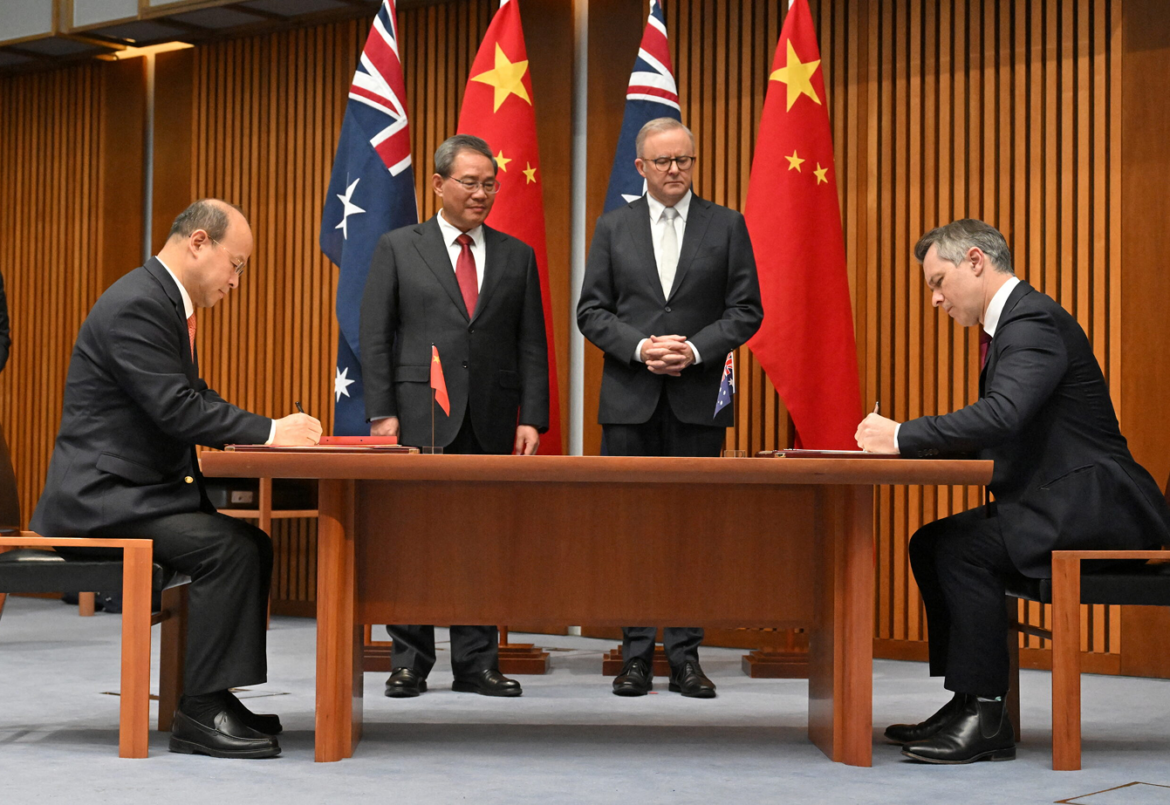
Australia’s relationship with China has entered a period of significant tension, reflecting broader geopolitical shifts in the Indo-Pacific region. Once defined by strong trade links and diplomatic cooperation, the bilateral relationship has increasingly been characterized by distrust, regulatory conflicts, and political disagreements. These tensions have important implications for Australia’s domestic politics, economic stability, and regional security posture.

Historical Context of Bilateral Relations

For decades, China has been Australia’s largest trading partner, and the two nations maintained a pragmatic approach centered on economic interdependence. Key exports such as iron ore, coal, and agricultural products underpinned decades of economic growth in Australia, while China benefited from a reliable supply of raw materials to support its industrial expansion.

However, the relationship has always been complex. While trade flourished, underlying strategic differences existed. Australia’s alliance with the United States, its participation in regional security arrangements, and occasional criticism of human rights issues in China have created friction points, though they were largely manageable in the past.

Economic Leverage and Trade Disputes

Economic relations are at the heart of current tensions. In recent years, China has imposed tariffs, import bans, and regulatory barriers on Australian products including barley, wine, coal, and meat. These measures were perceived in Canberra as politically motivated responses to Australian government positions on security, foreign policy, and human rights.

Such disputes have significant domestic consequences. Australian exporters face uncertainty, and regional supply chains are disrupted. Policymakers are pressured to balance economic pragmatism with national security priorities, creating debate over diversification of trade partners and resilience of export markets.

Security Concerns and Strategic Rivalry

Strategic considerations have further strained the relationship. Australia’s participation in security alliances, including the AUKUS pact and intelligence-sharing arrangements, positions it within a geopolitical framework often viewed by China as adversarial. Concerns about Chinese influence in Australian political, academic, and business sectors have led to the introduction of stricter foreign interference laws.

Military posturing and regional naval activities have reinforced perceptions of rivalry. Australia’s strategic policy increasingly emphasizes sovereignty, territorial security, and alignment with likeminded partners, complicating diplomatic engagement with Beijing.

Pages: 1 2

Advertisement

Federal elections in Australia consistently reflect not only political competition between parties, but also deeper structural concerns within society and the economy. While party leadership and campaign strategies attract media attention, voter behavior is primarily shaped by a set of recurring issues that directly affect daily life. In the current electoral cycle, several themes dominate public debate and influence voter priorities across states and territories.

Cost of Living and Inflation

The rising cost of living remains the most immediate concern for Australian voters. Increases in housing costs, energy prices, groceries, and essential services have placed sustained pressure on household budgets. Many voters perceive wages as failing to keep pace with inflation, particularly among middle- and lower-income groups.

Mortgage holders are especially sensitive to interest rate adjustments, while renters face limited supply and rising rents in major cities. As a result, voters closely scrutinize party proposals related to taxation, subsidies, and price regulation. Economic credibility has become a decisive factor in shaping electoral trust.

Healthcare and Access to Services

Healthcare continues to be a core electoral issue, particularly the long-term sustainability of Medicare. Australians broadly support a universal healthcare system, but concerns persist about funding shortages, hospital wait times, and access to general practitioners, especially in regional and remote areas.

Mental health services have gained increased attention, with voters expecting clearer commitments and measurable outcomes rather than symbolic policy statements. An aging population further amplifies concerns around aged care quality, staffing levels, and regulatory oversight.

Housing Affordability

Housing affordability has evolved from a social issue into a central political challenge. Younger voters, first-home buyers, and low-income households are disproportionately affected by escalating property prices. Limited housing supply, zoning restrictions, and investor-driven demand are frequently cited as contributing factors.

Voters are increasingly skeptical of short-term incentives and instead demand structural solutions, including planning reform, social housing investment, and long-term urban development strategies. Housing policy is now closely linked to perceptions of intergenerational fairness.

Pages: 1 2

Advertisement

logo

Disclaimer: This website provides information for informational purposes only and accepts no responsibility for decisions made by users. We recommend that you carefully review all details and consult a professional.

All rights reserved © 2026